Average Reviews:

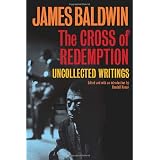
(More customer reviews)Randall Kenan, author of LET THE DEAD BURY THEIR DEAD and A VISITATION OF SPIRITS, has edited the uncollected writing of James Baldwin for which we can all be grateful. The book is divided into Essays and Speeches, Profiles, Letters, Forewords and Afterwords, Book Reviews and Fiction. The writings cover 1947 when Baldwin was writing book reviews until the year of his death in 1987 when Baldwin was at the height of his powers in what is one of the best articles included here, "To Crush a Serpent."
No subject is off limits for Mr. Baldwin as he writes unflinchingly about white racism, Jews, black power, black English and religious fundamentalism. He has an open letter to Angela Davis and essays on Sidney Poitier and Lorraine Hansberry. Baldwin is a hard marker. In his review of the novel THE MOTH by James M. Cain-- probably most famous for THE POSTMAN ALWAYS RINGS TWICE and DOUBLE INDEMNITY-- he says simply "Mr. Cain is no novelist: he has, indeed, his first sentence still to write; he has yet to achieve his first valid characterization." But it is Mr. Baldwin on the role of the Negro in America that he is sharpest and that he will probably be remembered for in a hundred years rather than his book reviews. I can think of no writer who has written better or with more passion on race in America than this great writer.
Time and time again Baldwin refers to what he calls "the nighmare of history" and laments that no one seems to learn from that history. In his essay "The Price May Be Too High," he opines that white people are beyond hope." And to persuade black boys and girls that their lives are less than other lives is "the sin against the Holy Ghost. He reminds us that slave labor made this country wealthy and that the American prison is filled with dark people. Baldwin does not mince words when it comes to white politicians, in particular Bobby Kennedy who could not understand why a black man would not want to take up arms to fight for this country. The Italian and other immigrants in this country spend their lives hating their parents, refusing to speak Italian in an effort to become American or upwardly mobile. Or as Baldwin says so eloquently, anyone making it in England did not get on the Mayflower. About fundamentalist religion, he says that the "Right Reverend Robertson" does not know the man from Galilee and that fundamentalists do not know that poor people exist. He sees white ministers and deputy sheriffs as one and the same. Finally Baldwin laments that President Eisenhower's favorite writer is Zane Grey. (He believes, by the way, that Henry James is America's greatest novelist.)
But for all of Baldwin's jeremiads, he hopes in the essay "Black Power" that "something will happen in the human heart that will change our common history." But if that something doesn't happen, then black people should remember that they come from a long line of runaway slaves "who survived without passports."
Although Mr. Baldwin has been dead almost 25 years, one wonders what he would think about our first black president. (He asked in one of his essays the question: why would a black man want to be president?) I fear that he would find many things the way he left them. Although integration may have come to the White House, sad to say, ours is still a segregated country where children in black and Latino neighborhoods often go to inferior schools and-- to paraphrase another fine writer of color-- too often find their dreams of a better life deferred.
Click Here to see more reviews about: The Cross of Redemption: Uncollected Writings
 Get 34% OFF
Click here for more information about The Cross of Redemption: Uncollected Writings

No comments:
Post a Comment