Average Reviews:

(More customer reviews)If you are looking for a field guide for insects in the Caribbean, this isn't it. As the title suggests, the largest section in the book, 27 pages out of 83, is devoted to butterflies. This is the strongest section of the book. In addition to a photo, the descriptions give limited information about the regional distribution of each species.
In dealing with the remainder of the insect orders, the author neglects geography almost completely. The orders of insects that are found in the eastern Caribbean are presented, along with a description of some of the important characteristics (anatomical and behavioral) of each group. The descriptions are very general, and would be equally apt for a book focusing on any geographical area or none at all. There is no information regarding issues such as regional species diversity or which islands the described groups are found on. Despite the title, it's really more like the first day's lecture from entomology 101 than a work that explores insects from a regional perspective. The information is readily available elsewhere.
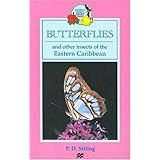
Butterflies and Other Insects of the Eastern Caribbean is extensively illustrated with attractive photographs. Unfortunately, the photos do not include any locality data or other region-specific information.
Click Here to see more reviews about: Butterflies and Other Insects of the Eastern Caribbean (Caribbean Pocket Natural History Series) (Macmillan Caribbean Natural History)
With the extensive use of colour photographs Butterflies and other Insects of the Eastern Caribbean forms a comprehensive guide to the species most commonly found in the Lesser Antilles, the chain of islands stretching from the Virgins to the North of Trinidad and Tobago in the south. Although focusing on this area, many of the butterflies featured can also be seen in the Greater Antilles, the islands of the western Caribbean. In addition to the natural historian and the professional entomologist, the book will be of great interest to Caribbean residents and non-specialist visitors.


No comments:
Post a Comment